
1. Creator Mindset & Direction
How aspiring creators can overcome fear, develop on-camera confidence, and show up with authenticity, clarity, and presence that captivates their audience.
Overview
Building confidence on camera is one of the most common challenges new creators face. Speaking to a lens can feel unnatural, intimidating, or vulnerable. Many aspiring creators worry about how they look, how they sound, whether they are being judged, or whether they are “good enough” to be on camera at all. These feelings are normal, especially for those with limited public-speaking experience. The goal is not to eliminate nervousness overnight, but to build practical skills, mindset shifts, and simple habits that make being on camera easier, more comfortable, and more enjoyable over time.
Confidence on camera is not about perfection. It is about clarity, presence, and authentic communication. When creators learn how to relax, express themselves naturally, and connect emotionally with their audience, their content becomes more powerful and relatable. This guide helps creators develop on-camera comfort by focusing on techniques that support creator development, reduce fear, and simplify the process of filming. You will explore body language, tone, mindset, scripting strategies, practice routines, and ways to reduce anxiety during filming.
By the end, you will gain confidence, strategy, and clarity around how to show up authentically and consistently on camera. You will understand that confidence is a skill, not a talent, and that every video is an opportunity to grow. This guide empowers you to step into your creator identity fully and take bold action in front of the camera with less hesitation and more self-assurance.
Why It Matters
Improves communication and audience connection
Creates stronger on-camera presence and engagement
Reduces fear, anxiety, and hesitation before filming
Builds trust and relatability with viewers
Helps creators express themselves with clarity and authenticity
Supports long-term growth and sustainable confidence
Makes content creation faster and more enjoyable
Strengthens storytelling, delivery, and emotional impact
Common Challenges
Feeling awkward, stiff, or unnatural on camera
Overthinking appearance, voice, or facial expressions
Fear of judgment from strangers or people you know
Not knowing what to do with your hands or body movements
Using scripts that feel robotic or forced
Speaking too quickly, too quietly, or with inconsistent tone
Feeling disconnected from the audience because the lens feels “cold”
Comparing yourself to experienced creators
Struggling to maintain confidence when views are low
Believing confidence must come before taking action
Steps to Take
Normalize the discomfort
Action: Accept that feeling awkward at first is completely normal.
How: Remind yourself that every creator you admire once felt the exact same discomfort.
Example: A TikTok creator films their first 10 videos knowing they will improve dramatically after consistent practice.Practice speaking to the lens daily
Action: Build camera comfort through repetition.
How: Record short, unposted practice clips each day to observe voice, tone, and presence.
Example: A YouTuber records 60-second practice clips every morning before work.Use simple, natural scripting
Action: Write flexible bullet points instead of word-for-word scripts.
How: Focus on key points and speak conversationally rather than reading.
Example: A podcaster writes three main talking points and fills in the rest naturally.Warm up your voice and face
Action: Prepare your facial muscles, voice, and body before filming.
How: Do light vocal warmups, stretch your face, and loosen your shoulders.
Example: A creator hums, smiles, and moves their jaw before turning the camera on.Film in a comfortable environment
Action: Create a space where you feel safe and relaxed.
How: Film alone, close the door, tidy the space, and reduce distractions.
Example: A shy creator films in their car because it feels private and calming.Focus on one viewer, not the entire internet
Action: Pretend you are speaking to a specific person.
How: Choose a real friend, client, or viewer persona and talk directly to them.
Example: A beauty creator imagines explaining a routine to one friend instead of thousands of strangers.Slow down your pacing
Action: Speak slower than you think you need to.
How: Pause briefly between main ideas and breathe intentionally.
Example: A creator reviewing their footage realizes they talk too fast and begins to incorporate breathing pauses.Use positive body language
Action: Adjust posture, expression, and gestures to build confidence.
How: Sit or stand tall, keep shoulders relaxed, and use natural hand movements.
Example: A creator keeps their hands visible to look more open and relatable.Improve your lighting and audio
Action: Make yourself look and sound better so you feel better on camera.
How: Use natural light and a simple microphone for clarity.
Example: A beginner creator immediately feels more confident when their video looks bright and crisp.Film multiple takes without judgment
Action: Allow yourself to redo segments without frustration.
How: Treat takes as practice, not failure.
Example: A creator films an intro five times until they feel natural and relaxed.Celebrate small improvements
Action: Track tiny wins such as clearer speech or better posture.
How: Review your footage and note specific progress.
Example: A creator realizes they maintained eye contact longer and celebrates that win.Post before you feel ready
Action: Share your content even if you see flaws.
How: Recognize that confidence grows through action, not waiting.
Example: A nervous creator posts their first video knowing growth requires public practice.Stay consistent for at least 90 days
Action: Commit to showing up regularly to build confidence through repetition.
How: Post weekly or daily content to create momentum.
Example: A creator posts twice a week for three months and notices dramatic improvement.
Detailed Examples
Example 1
Situation: A creator is terrified of being on camera. They avoid filming for months and feel embarrassed speaking into a lens. Every time they try, they freeze or feel stiff.
Action: They begin by recording 30-second practice clips where they introduce themselves. They do not post these clips, but they review them to observe progress. Over time, they adjust their posture, slow their speech, and add small smiles. They also create a comfortable filming environment with good lighting and a simple setup.
Result: After two weeks, they feel significantly more comfortable. Their voice sounds more natural, their expressions softer, and their pacing slower. They film their first full video and post it despite feeling nervous. Viewers respond positively, reinforcing their progress. Confidence grows through exposure and repetition.
Example 2
Situation: A creator posts their first video and receives a few comments criticizing their accent, appearance, or delivery. Their confidence drops, and they consider quitting.
Action: Instead of giving up, they focus on speaking to one ideal viewer and ignore negative noise. They record new videos using bullet-point scripts and begin warming up their voice before filming. They practice daily on video calls with friends to build comfort. They also make small improvements each week, such as adding better lighting or adjusting posture.
Result: Their delivery becomes smoother, and viewers begin praising their authenticity and clarity. Their accent becomes part of their charm rather than something to hide. Their channel grows steadily because they refuse to let self-doubt win.
Example 3
Situation: A creator talks too fast when nervous, causing viewers to struggle to follow. The creator feels embarrassed when watching their footage and avoids publishing because they think they “sound weird.”
Action: They begin practicing the technique of intentional slow pacing. They insert micro-pauses between sentences, practice breathing before filming, and record themselves reading simple sentences slowly. They also begin smiling at the start of each clip to relax their facial muscles. They script only key bullet points to avoid speaking quickly from panic.
Result: Their pacing becomes clearer, calmer, and more controlled. Viewers applaud their improved communication, and the creator feels more confident watching their own videos. Slow pacing becomes part of their recognizable style.
Common Mistakes
Trying to be perfect before posting content
Speaking too quickly due to nerves
Overthinking body language and becoming stiff
Avoiding filming because of fear of judgment
Relying too heavily on scripted delivery
Using flat tone or low energy on camera
Filming in uncomfortable or distracting environments
Expecting confidence to appear instantly instead of gradually.
Creator Tips
Film frequently to build muscle memory.
Speak as if talking to one trusted friend.
Smile early in the clip to relax your facial muscles.
Use bullet points instead of long scripts.
Review your footage with kindness, not criticism.
Improve your environment to feel more comfortable.
Remember that every creator improves with time.
Let your personality shine through rather than hiding quirks.
Conclusion
Building confidence on camera is a gradual, achievable process that comes from consistent practice, mindset shifts, and small improvements. You do not need to be charismatic, flawless, or perfectly polished to make an impact. You need clarity, authenticity, and willingness to grow publicly. Every creator begins from zero confidence; what sets successful creators apart is their commitment to showing up despite fear. By practicing daily, using natural scripting, improving your environment, focusing on one viewer, and celebrating small wins, you will grow more comfortable and expressive on camera. Confidence is not a prerequisite for content creation, it’s a result of content creation. The more you film, the more you grow.
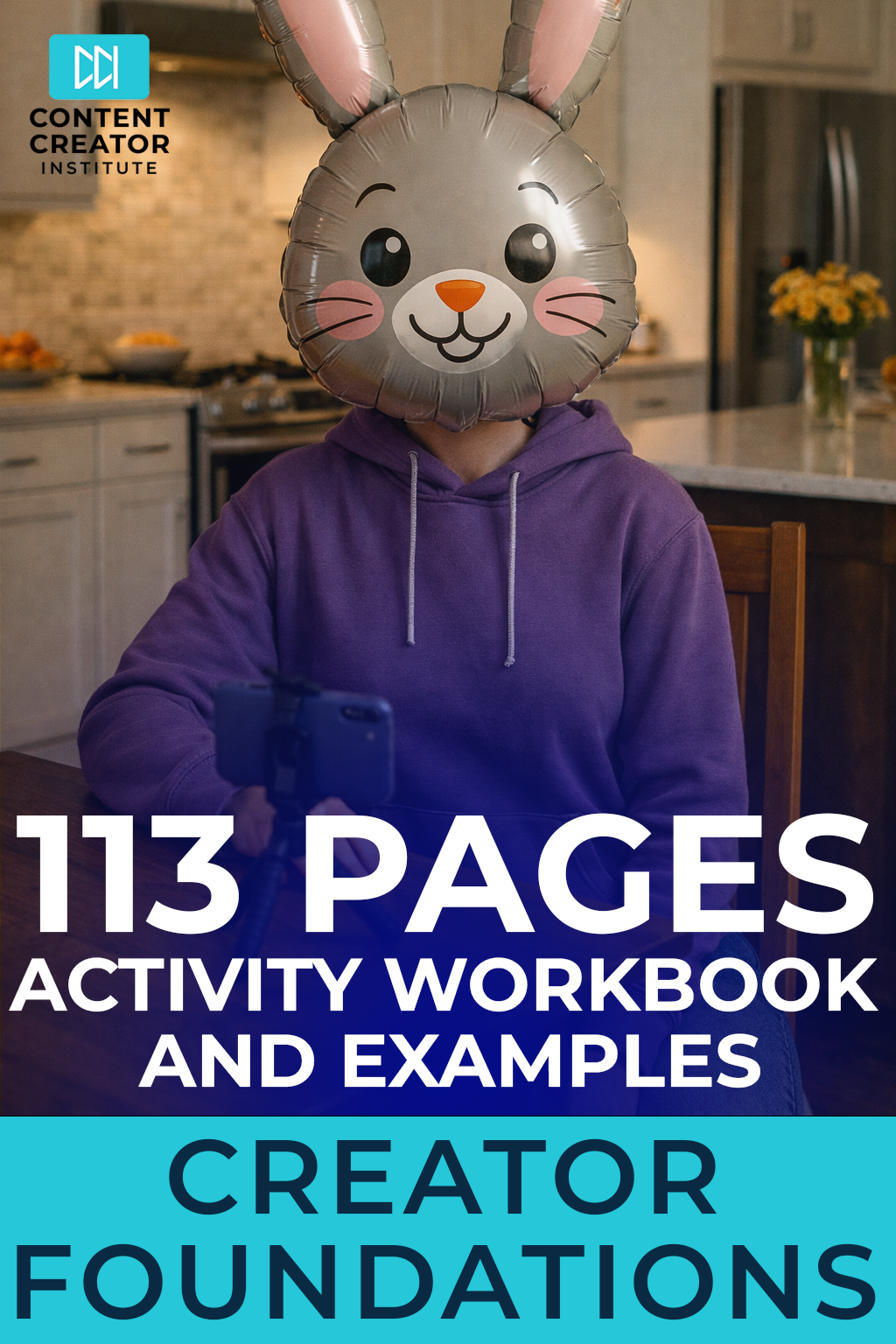
Level 1: Content Creator Foundations - Activity Workbook & Examples
$25.00
Your Practical Starting Point for Clarity, Confidence, and Consistent Creation
Are you thinking about becoming a content creator, but unsure where to start? Are you opening your phone or laptop with ideas in your head but no clear plan for turning them into consistent content? Do you want to build something meaningful without burning out, copying everyone else, or constantly second guessing yourself?
The Content Creator Foundations Activity Workbook works together with the Content Creator Foundations Course and is the behind-the-scenes planning system every new and aspiring creator needs. This 113 page guided workbook helps you organize your ideas, define your direction, and build sustainable habits so content creation feels clear and manageable from the very beginning.
Whether you are exploring content creation as a creative hobby or laying the groundwork for a long-term career, this workbook gives you a structured way to move forward with confidence instead of uncertainty.
Why This Workbook Matters
New creators don’t struggle because they lack ideas. They struggle because they lack direction, structure, and a clear starting point.
Between choosing a niche, figuring out what to post, learning how platforms work, setting up filming, editing, and trying to stay consistent, content creation can quickly feel confusing and mentally exhausting. Without a plan, most creators stop before they ever build momentum.
This workbook removes that friction.
Instead of guessing, you work through clear activities that guide your thinking, your decisions, and your actions. You are shown what progress actually looks like, with completed examples included throughout so you never feel stuck wondering if you are doing it “right.”
What Makes This Workbook Different
Most creator workbooks ask questions and leave you to figure out the answers on your own. This one shows you how to think through each step.
✔ 113 pages of structured activities tied to content creator decisions
✔ Clear instructions that tell you exactly what to do and why
✔ Fully completed examples for every lesson
✔ Focus on systems, not motivation or trends
✔ Designed to reduce mental load and build confidence through action
✔ Built for beginners without requiring experience or equipment
This is not about posting more content. It is about building a foundation that makes consistency possible.
Who This Workbook Is For
This workbook is designed for creators at the beginning of their journey, including:
🎥 Aspiring content creators exploring a new path
📱 Hobby creators who want more structure and clarity
🎙️ Creators building confidence on camera
✍️ Writers, educators, and professionals testing content ideas
🚀 New creators who want systems, not shortcuts
If you want to understand content creation before committing fully, this workbook gives you a safe, practical place to start.
What’s Inside the Workbook
Inside this 113 page activity workbook, you will work through exercises covering:
• Choosing and testing a content niche
• Defining a recognizable content style
• Building confidence on camera
• Understanding how platforms surface content
• Long-form versus short-form decision making
• Selecting a primary platform
• Creating repeatable content idea systems
• Balancing trend and evergreen content
• Building a personal content vault
• Setting up simple filming workflows
• Editing for speed and clarity
• Developing a realistic posting schedule
• Reducing overthinking and perfection paralysis
Each section is designed to move you from uncertainty to clarity, one step at a time.
How to Use This Workbook
Open a blank Word document or Google Doc and use it as your working space alongside the workbook. Answer the questions honestly, write freely, and focus on progress instead of polish. You are creating a planning and thinking tool, not a finished product.
You can move through one lesson at a time, revisit sections as your ideas evolve, and reuse the frameworks as your skills grow.
This workbook is meant to be returned to, not completed once and forgotten.
Imagine This…
Knowing what you want to create and why.
Opening your content notes and seeing clear ideas instead of scattered thoughts.
Feeling confident on camera because you understand your style.
Posting consistently because your process supports you.
Building something sustainable, whether content creation becomes a career or remains a meaningful creative outlet.
This workbook helps you build clarity first, so momentum can follow.
Get the Content Creator Foundations Activity Workbook
113 pages. Clear guidance. Real examples. No fluff. Build your foundation once so everything you create after this has something solid to stand on.
👉 Get the Workbook
Self-Reflection Questions
What fears do I have about being on camera?
Which parts of being filmed make me feel most uncomfortable?
What improvements have I already made that I might be overlooking?
How does my ideal viewer benefit from me showing up authentically?
What negative thoughts hold me back while filming?
How can I show myself more compassion during the learning process?
What small improvements can I make in my next video?
How will consistent practice change my confidence over time?
Keyword Phrases
On-camera confidence: The skill of appearing comfortable, natural, and expressive on video.
Camera presence: The combination of tone, energy, and body language that influences viewer engagement.
Bullet-point scripting: A flexible scripting method using key points instead of full sentences.
Mindset shift: A mental adjustment that helps reduce fear and anxiety.
Pacing control: The skill of adjusting speech speed for clarity and calm delivery.
Warmup routine: Pre-filming exercises that improve vocal and facial comfort.
Practice repetition: Daily filming habits that accelerate on-camera growth.
Viewer connection: The emotional bond formed between creator and audience.
Tools and Resources
Smartphone or webcam for daily practice
Ring light or natural light source
Lavalier or USB microphone for clear audio
CapCut or iMovie for simple editing
Mirror practice for facial expression awareness
Voice note apps for tone and pacing rehearsal
Video call practice with friends
Calm or meditation apps for pre-filming relaxation