
5. Posting & Consistency
How creators can overcome overthinking, stop endlessly tweaking, and publish confidently by focusing on progress, clarity, and momentum instead of perfection.
Overview
Content perfection paralysis happens when creators delay publishing because content never feels “ready.” What starts as a desire to do good work turns into endless tweaking, second guessing, and fear of judgment. Creators re-record intros, re-edit captions, change thumbnails repeatedly, or abandon posts entirely. The result is stalled growth, lost momentum, and rising frustration. Perfection paralysis is not a skill problem. It is a decision problem fueled by fear, unclear standards, and unrealistic expectations.
Perfection is especially tempting early on, when creators believe every post represents their entire brand. In reality, audiences reward consistency, clarity, and usefulness far more than polish. Algorithms also favor output and iteration over flawless execution. This lesson explains why perfection paralysis happens, how it damages progress, and how to replace it with practical systems that support action. You will learn how to define “good enough,” build confidence through repetition, and create faster feedback loops that drive improvement.
By the end of this lesson, creators will understand how to break perfection paralysis, publish more consistently, and build confidence through momentum instead of waiting for ideal conditions.
Why It Matters
Unlocks consistent publishing and steady growth
Reduces anxiety and overthinking before posting
Builds confidence through action and repetition
Improves learning through faster feedback
Prevents burnout caused by endless tweaking
Helps creators ship content on schedule
Aligns effort with real audience priorities
Creates momentum that compounds over time
Common Challenges
Waiting for content to feel perfect before publishing
Over editing small details most viewers will not notice
Re-recording content repeatedly due to self-doubt
Fear of judgment, criticism, or negative comments
Comparing early content to polished creators
Believing one post will define your brand
Struggling to decide when content is finished
Letting perfection delay consistency
Feeling embarrassed by early-stage content
Confusing improvement with flawlessness
Steps to Take
Understand what perfection paralysis really is
Action: Reframe perfectionism as avoidance, not quality.
How: Recognize that perfection paralysis often protects you from judgment by delaying exposure. Naming the behavior reduces its power.
Example: A creator realizes they keep re-editing to avoid pressing publish, not to improve clarity.Define a clear “good enough” standard
Action: Decide what finished means in advance.
How: Write simple criteria such as clear audio, understandable message, and basic visual quality. Anything beyond that is optional.
Example: A creator commits to publishing once audio is clean and the message is clear.Separate creation from evaluation
Action: Stop judging while creating.
How: Create first, then evaluate once at the end instead of mid-process.
Example: A creator records an entire video without stopping to critique delivery.Set time limits for creation and editing
Action: Use constraints to force decisions.
How: Assign a fixed time window to each stage and stop when time expires.
Example: A creator gives themselves 30 minutes to edit a short-form video.Focus on audience value over self-judgment
Action: Shift attention outward.
How: Ask whether the content helps, informs, or resonates instead of whether it looks perfect.
Example: A creator publishes a slightly imperfect video because the advice is useful.Reduce decision fatigue
Action: Eliminate repeated choices.
How: Use templates, presets, and consistent styles to avoid endless options.
Example: A creator uses the same caption style and thumbnail format every time.Publish consistently to normalize imperfection
Action: Make imperfection routine.
How: Commit to a posting schedule that prioritizes output over polish.
Example: A creator posts twice a week regardless of how the content feels emotionally.Use feedback as direction, not validation
Action: Learn instead of seeking approval.
How: Review comments and analytics for patterns instead of praise.
Example: A creator adjusts pacing after noticing consistent drop-off points.Stop comparing early content to mature creators
Action: Compare progress only to yourself.
How: Remember that creators you admire posted hundreds of imperfect videos before refining their style.
Example: A creator studies early videos from successful channels to reset expectations.Create fast feedback loops
Action: Improve through iteration.
How: Publish, observe results, adjust the next piece.
Example: A creator experiments with hooks across multiple posts instead of perfecting one.Reframe mistakes as data
Action: Turn errors into information.
How: Treat every post as an experiment instead of a final statement.
Example: A creator views low engagement as guidance, not failure.Celebrate posting, not polishing
Action: Reward completion.
How: Track published content instead of hours spent editing.
Example: A creator marks every published post as a win.
Detailed Examples
Example 1
Situation: A creator records the same video five times because delivery never feels right. They keep delaying publishing out of fear the content is not good enough.
Action: They set a rule to record once, do one edit pass, and publish within the same day. They focus only on clarity and usefulness.
Result: The video performs better than expected and receives positive feedback. The creator feels relief and confidence after taking action.
Example 2
Situation: A creator spends hours editing captions, colors, and transitions that viewers rarely comment on. Publishing becomes exhausting and inconsistent.
Action: They create a fixed editing template and set strict time limits for edits. They stop adjusting visuals once readability is achieved.
Result: Editing time is cut in half and posting becomes consistent. The creator regains energy and momentum.
Example 3
Situation: A creator avoids posting because they compare their work to highly polished creators. They feel embarrassed by their current skill level.
Action: They study early content from successful creators and commit to a 30-day imperfect posting challenge. They focus on learning, not impressing.
Result: Confidence grows through repetition and feedback. The creator improves faster by posting more often.
Common Mistakes
Waiting until content feels perfect
Endlessly re-editing minor details
Letting fear delay publishing
Comparing yourself to advanced creators
Judging content before releasing it
Ignoring time limits
Seeking validation instead of feedback
Equating perfection with professionalism
Creator Tips
Progress beats perfection every time.
Viewers value clarity over polish.
Momentum reduces fear.
Constraints create action.
Templates remove hesitation.
Publishing builds confidence.
Feedback accelerates improvement.
Finished content compounds.
Conclusion
Breaking content perfection paralysis is about choosing progress over protection. Perfection does not build confidence; action does. When creators define clear standards, limit decisions, and commit to publishing consistently, fear loses its grip. Growth accelerates through repetition, feedback, and momentum. By replacing perfectionism with systems, creators free themselves to learn faster, show up more often, and build trust with their audience over time. This lesson empowers creators to stop waiting, start posting, and let progress do the work.
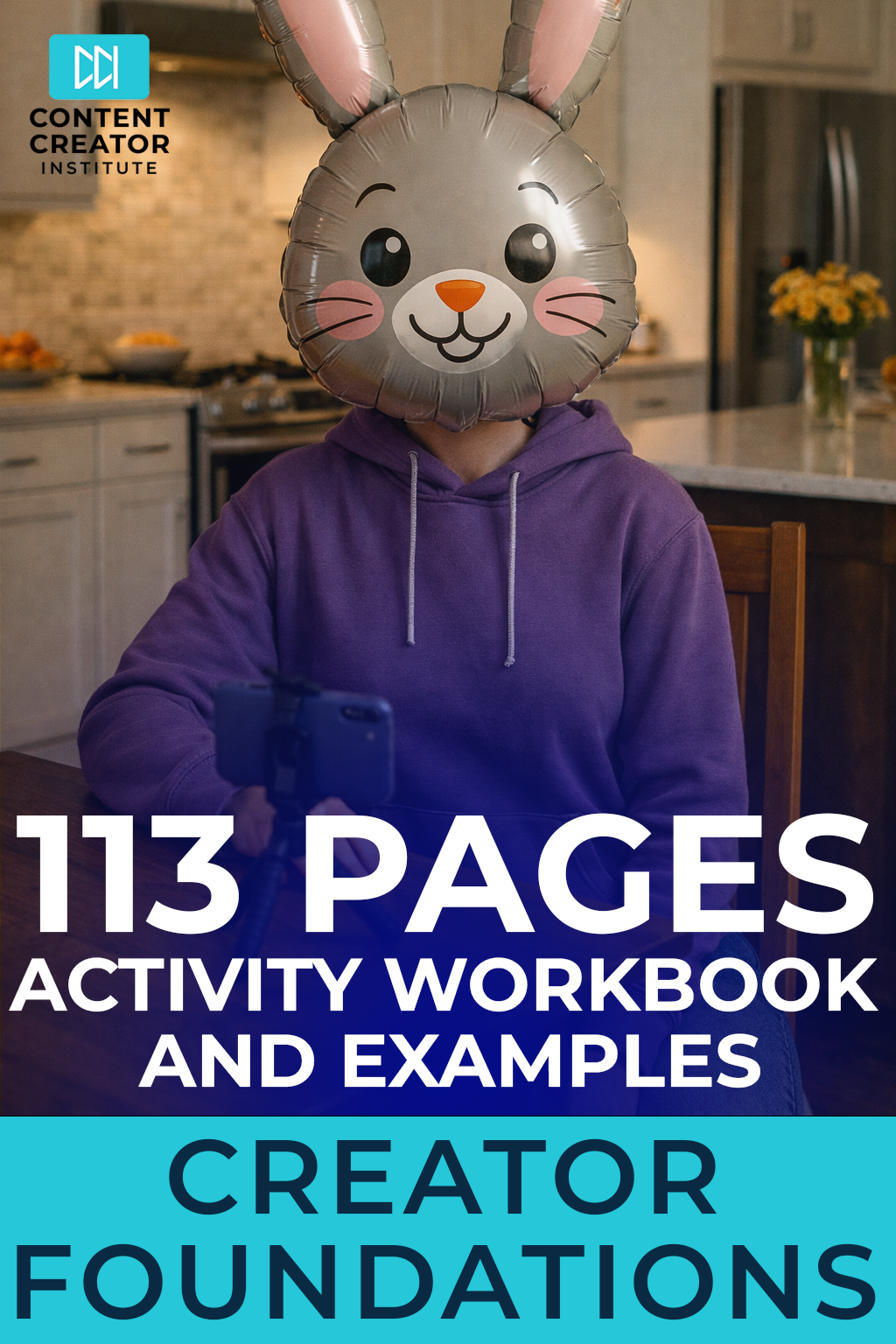
Level 1: Content Creator Foundations - Activity Workbook & Examples
$25.00
Your Practical Starting Point for Clarity, Confidence, and Consistent Creation
Are you thinking about becoming a content creator, but unsure where to start? Are you opening your phone or laptop with ideas in your head but no clear plan for turning them into consistent content? Do you want to build something meaningful without burning out, copying everyone else, or constantly second guessing yourself?
The Content Creator Foundations Activity Workbook works together with the Content Creator Foundations Course and is the behind-the-scenes planning system every new and aspiring creator needs. This 113 page guided workbook helps you organize your ideas, define your direction, and build sustainable habits so content creation feels clear and manageable from the very beginning.
Whether you are exploring content creation as a creative hobby or laying the groundwork for a long-term career, this workbook gives you a structured way to move forward with confidence instead of uncertainty.
Why This Workbook Matters
New creators don’t struggle because they lack ideas. They struggle because they lack direction, structure, and a clear starting point.
Between choosing a niche, figuring out what to post, learning how platforms work, setting up filming, editing, and trying to stay consistent, content creation can quickly feel confusing and mentally exhausting. Without a plan, most creators stop before they ever build momentum.
This workbook removes that friction.
Instead of guessing, you work through clear activities that guide your thinking, your decisions, and your actions. You are shown what progress actually looks like, with completed examples included throughout so you never feel stuck wondering if you are doing it “right.”
What Makes This Workbook Different
Most creator workbooks ask questions and leave you to figure out the answers on your own. This one shows you how to think through each step.
✔ 113 pages of structured activities tied to content creator decisions
✔ Clear instructions that tell you exactly what to do and why
✔ Fully completed examples for every lesson
✔ Focus on systems, not motivation or trends
✔ Designed to reduce mental load and build confidence through action
✔ Built for beginners without requiring experience or equipment
This is not about posting more content. It is about building a foundation that makes consistency possible.
Who This Workbook Is For
This workbook is designed for creators at the beginning of their journey, including:
🎥 Aspiring content creators exploring a new path
📱 Hobby creators who want more structure and clarity
🎙️ Creators building confidence on camera
✍️ Writers, educators, and professionals testing content ideas
🚀 New creators who want systems, not shortcuts
If you want to understand content creation before committing fully, this workbook gives you a safe, practical place to start.
What’s Inside the Workbook
Inside this 113 page activity workbook, you will work through exercises covering:
• Choosing and testing a content niche
• Defining a recognizable content style
• Building confidence on camera
• Understanding how platforms surface content
• Long-form versus short-form decision making
• Selecting a primary platform
• Creating repeatable content idea systems
• Balancing trend and evergreen content
• Building a personal content vault
• Setting up simple filming workflows
• Editing for speed and clarity
• Developing a realistic posting schedule
• Reducing overthinking and perfection paralysis
Each section is designed to move you from uncertainty to clarity, one step at a time.
How to Use This Workbook
Open a blank Word document or Google Doc and use it as your working space alongside the workbook. Answer the questions honestly, write freely, and focus on progress instead of polish. You are creating a planning and thinking tool, not a finished product.
You can move through one lesson at a time, revisit sections as your ideas evolve, and reuse the frameworks as your skills grow.
This workbook is meant to be returned to, not completed once and forgotten.
Imagine This…
Knowing what you want to create and why.
Opening your content notes and seeing clear ideas instead of scattered thoughts.
Feeling confident on camera because you understand your style.
Posting consistently because your process supports you.
Building something sustainable, whether content creation becomes a career or remains a meaningful creative outlet.
This workbook helps you build clarity first, so momentum can follow.
Get the Content Creator Foundations Activity Workbook
113 pages. Clear guidance. Real examples. No fluff. Build your foundation once so everything you create after this has something solid to stand on.
👉 Get the Workbook
Self-Reflection Questions
What usually stops me from publishing?
What am I afraid will happen if I post?
What does “good enough” really mean for me?
How often do I delay unnecessarily?
What would improve if I published more often?
How can I reduce decisions in my workflow?
What patterns do I see in feedback?
Am I learning faster by waiting or by shipping?
Keyword Phrases
Perfection paralysis: Delaying publishing due to fear of imperfection.
Good enough standard: Predefined criteria for publishing content.
Decision fatigue: Mental exhaustion from too many choices.
Publishing momentum: Confidence built through consistent output.
Iteration mindset: Improving through repeated publishing.
Feedback loops: Learning from performance data.
Creative confidence: Trust built through action.
Shipping habit: Prioritizing completion over polish.
Tools and Resources
Time-blocking tools
Editing templates and presets
Publishing checklists
Content trackers
Analytics dashboards
Imperfect posting challenges
Weekly review templates
Creator accountability systems