
1. Creator Mindset & Direction
How creators can develop a signature content style that differentiates their brand, strengthens audience recognition, and builds long-term engagement across any platform.
Overview
Defining your unique content style is one of the most powerful steps in creator development. While anyone can copy trends, formats, or viral templates, only creators with a recognizable style become memorable, trusted, and impossible to replicate. A unique content style is a combination of voice, personality, tone, pacing, editing choices, aesthetic cues, storytelling methods, and the emotional experience you create for viewers. Many creators believe they need the highest-quality equipment or the most complex editing techniques to stand out, but the truth is much simpler: what makes you unique is already within you. You only need a process to uncover it and express it consistently.
Your content style affects how viewers perceive you, whether they trust you, and whether they choose you over countless alternatives. When creators develop a clear style, they improve their content workflow, boost audience engagement, and reduce confusion about how to show up online. This guide helps creators identify signature elements, infuse personality into their work, and establish repeatable stylistic patterns that make their content recognizable in seconds. By clarifying your style, you improve audience loyalty, simplify content creation, and unlock a stronger creator identity that evolves with you over time.
This guide walks you through defining your visual identity, tonal direction, recurring themes, editing style, storytelling methods, brand energy, and emotional impact. It includes real-world examples, practical steps, reflection questions, and actionable strategies to help creators develop a style that aligns with their strengths, goals, and long-term content vision. By the end, you will gain clarity, strategy, and confidence in your ability to create content that stands out, resonates deeply, and feels unmistakably yours..
Why It Matters
Strengthens your identity in a crowded creator landscape
Builds long-term audience recognition and trust
Reduces confusion about content direction and tone
Improves viewer loyalty and repeat engagement
Helps creators express themselves with confidence
Creates a cohesive brand experience for viewers
Supports sustainable workflows and creative consistency
Makes your content more memorable, shareable, and distinctive
Common Challenges
Feeling unsure about how to express personality on camera
Believing everything has already been done before
Trying to mimic other successful creators instead of developing originality
Struggling to balance authenticity with professionalism
Producing content that looks or feels inconsistent from post to post
Not knowing which stylistic elements to focus on
Feeling overwhelmed by editing styles, aesthetics, or visual branding
Being unaware of how viewers perceive your tone or energy
Switching styles too often without intention
Trying to impress instead of connect
Steps to Take
Identify your natural communication strengths
Action: Reflect on how you naturally speak, teach, entertain, problem-solve, or express ideas.
How: Record yourself talking about a topic without a script. Observe your tone, pacing, gestures, humor, clarity, and energy.
Example: A YouTuber realizes they speak quickly and enthusiastically, which could become part of a signature fast-paced, high-energy style.Analyze your personality traits
Action: Clarify the emotions and personality elements you want your content to express.
How: Choose three to five core traits: calm, bold, funny, analytical, warm, rebellious, encouraging, direct, or witty.
Example: A podcaster chooses “calm, thoughtful, analytical,” leading them to develop a reflective storytelling approach.Study your favorite creators
Action: Identify what you admire—not copy—about others’ styles.
How: List specific stylistic features such as editing pace, audio tone, framing, humor, transitions, music, or storytelling rhythm.
Example: A TikTok creator admires how one creator uses humor through unexpected cuts, while another uses soft backgrounds and minimalism.Identify your signature visual elements
Action: Choose consistent aesthetic components that match your personality.
How: Decide on lighting style, color palette, camera angles, wardrobe choices, or visual symbolism.
Example: A creator who values simplicity chooses natural lighting, neutral colors, and clean backgrounds as part of their signature look.Choose your preferred pacing and structure
Action: Determine whether your content is fast-paced, slow and thoughtful, linear, or story-driven.
How: Experiment with different pacing styles in several test videos.
Example: A gaming creator tries both fast-cut humor and slow commentary, discovering their audience responds best to narrative pacing.Define your signature voice and tone
Action: Clarify how you want to sound.
How: Choose tone descriptors such as friendly, authoritative, comedic, conversational, motivational, or journalistic.
Example: A creator chooses a “supportive older sibling” tone that becomes the emotional foundation of every video.Develop repeatable storytelling methods
Action: Choose recurring narrative patterns such as problem-solution, before-after, step-by-step, confession-style, comedic rant, or tutorial story arcs.
How: Identify which method feels the most natural to create and the easiest for viewers to follow.
Example: A lifestyle creator adopts a confession-style opening followed by a reflective insight and practical takeaway.Create stylistic rules for editing
Action: Establish consistent editing habits to reinforce your brand.
How: Decide on transition types, music style, on-screen text rules, comedic timing, or zoom effects.
Example: A vlogger uses subtle zooms and consistent background music to build a recognizable editing rhythm.Define your emotional impact
Action: Clarify how you want viewers to feel during and after watching your content.
How: Write a simple statement such as “I want viewers to feel inspired” or “I want viewers to feel understood.”
Example: A creator chooses “motivated,” which leads them to incorporate encouraging language and energetic soundtracks.Test and refine your style
Action: Create 5 to 10 videos with intentional stylistic elements and analyze viewer response.
How: Look for comments about tone, pace, visuals, humor, relatability, or clarity.
Example: A creator receives repeating comments like “Your calm voice relaxes me,” signaling a powerful branding opportunity.Build consistency with templates
Action: Create repeatable content structures that make production easier.
How: Develop an intro formula, a typical video flow, editing checklist, or a repeatable hook style.
Example: A creator writes a script template with the same opening question, middle insight, and signature closing line.Allow your style to evolve naturally
Action: Recognize that style is not fixed. It grows as you grow.
How: Experiment with new elements while preserving your core identity.
Example: A creator known for commentary gradually adds gentle humor as their confidence increases.
Detailed Examples
Example 1
Situation: A creator starts making educational videos but feels their content lacks personality. They sound stiff and overly scripted. Their analytics show viewers leave after the first 20 seconds.
Action: They record themselves speaking without a script and discover they are naturally humorous and conversational. They revise their content style to include small jokes, casual language, and relatable examples. They also add a signature visual element: colorful on-screen text that appears during punchlines.
Result: Their audience retention increases dramatically. Comments begin mentioning their humor, and viewers say the content feels more approachable. The creator gains confidence, develops a repeatable flow, and finds it easier to film videos that feel authentic and enjoyable.
Example 2
Situation: A beauty creator films tutorials using different editing styles each week. Some videos are fast-paced, others are soft and slow. Their audience feedback is inconsistent because the content feels unpredictable.
Action: The creator analyzes which videos have the most watch time and discovers that viewers prefer calm, thoughtfully paced makeup tutorials with soft background music. They also notice comments praising their gentle, warm tone and minimalistic backgrounds.
Result: The creator defines their unique content style as “soft, clean, calming beauty tutorials.” They choose pastel visuals, gentle editing, and clear, slow instructions. Their videos become instantly recognizable, and their follower count grows steadily.
Example 3
Situation: A travel creator wants to stand out but feels overshadowed by creators with expensive gear and exotic destinations. They worry they cannot compete.
Action: They decide to define their style based on personality rather than locations. They adopt a storytelling format focused on small, meaningful travel moments, pairing short monologues with cinematic close-ups of daily life. They use warm voiceovers, poetic language, and a consistent color filter.
Result: Audiences begin praising their emotional depth and relatable approach to travel storytelling. Their videos become shareable and memorable, not because of grand destinations but because of their distinctive artistic tone. The creator develops a strong, recognizable identity without needing expensive travel.
Common Mistakes
Trying to copy the style of creators you admire.
Overcomplicating aesthetics or editing.
Changing styles too frequently without intention.
Forgetting to express personality or emotion.
Believing unique style comes from equipment instead of creativity.
Ignoring viewer feedback that reveals your strengths.
Creator Tips
Lean into your quirks as they make your content memorable.
Stay consistent with at least three style elements.
Do not force personality traits that do not feel natural.
Let analytics guide you, but keep your authenticity intact.
Recognizable does not mean complex as simple styles are often strongest.
Viewers connect with emotional consistency more than visual perfection.
Your unique voice becomes clearer the more you create.
Conclusion
Defining your unique content style is essential for building a sustainable, memorable, and impactful creator brand. Your style is not about aesthetics alone, it is about how you express yourself, how you communicate, and how you make your audience feel. When creators align their personality, strengths, tone, pacing, visuals, and storytelling choices, they create a recognizable identity that sets them apart. Your style becomes a signature, something viewers can identify instantly. By applying the steps in this guide, you will build a content presence that stands out, resonates emotionally, and remains authentic to who you are. Over time, your style will continue to evolve as you grow, but its essence will always be built on the foundation of clarity, confidence, and intentionality.
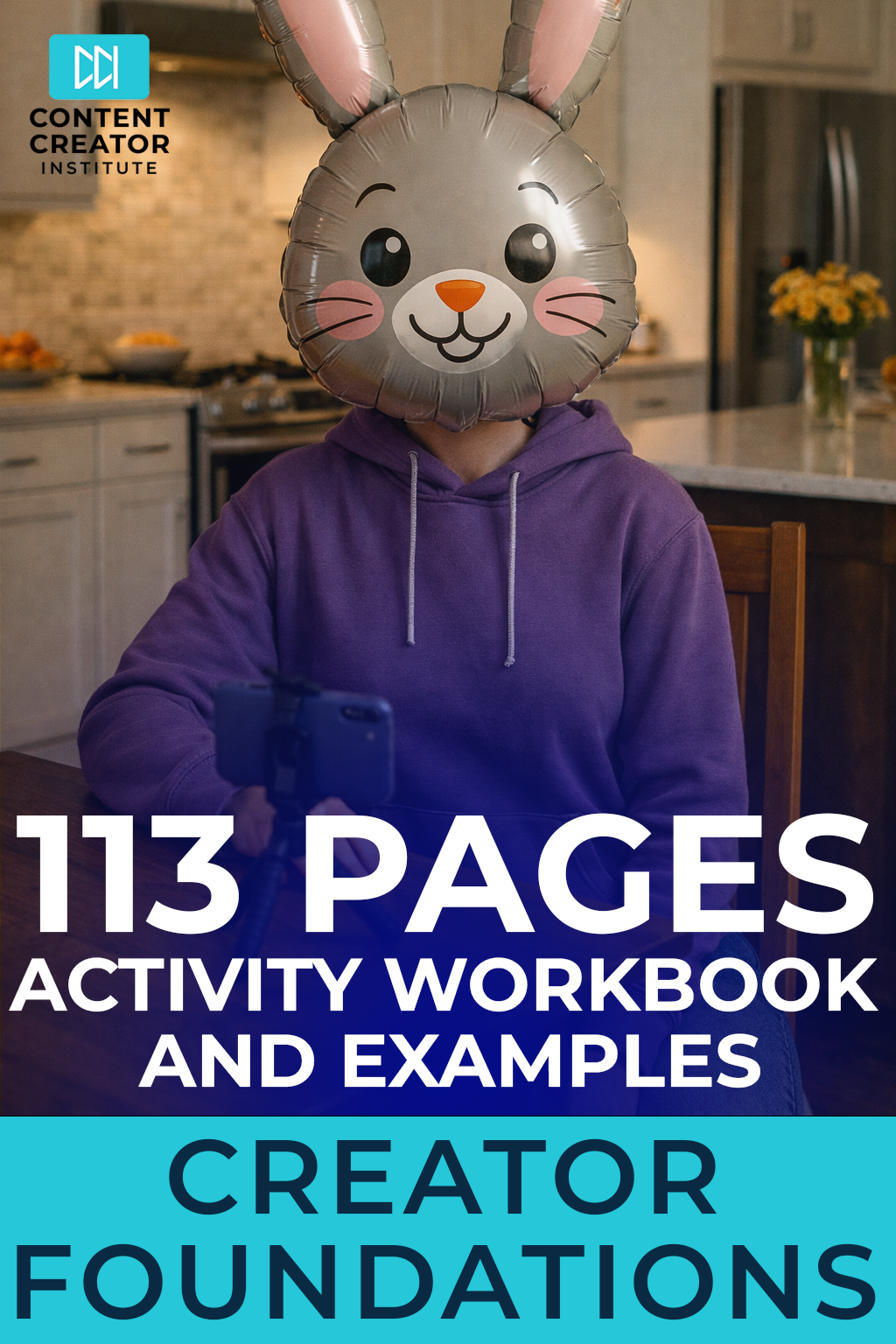
Level 1: Content Creator Foundations - Activity Workbook & Examples
$25.00
Your Practical Starting Point for Clarity, Confidence, and Consistent Creation
Are you thinking about becoming a content creator, but unsure where to start? Are you opening your phone or laptop with ideas in your head but no clear plan for turning them into consistent content? Do you want to build something meaningful without burning out, copying everyone else, or constantly second guessing yourself?
The Content Creator Foundations Activity Workbook works together with the Content Creator Foundations Course and is the behind-the-scenes planning system every new and aspiring creator needs. This 113 page guided workbook helps you organize your ideas, define your direction, and build sustainable habits so content creation feels clear and manageable from the very beginning.
Whether you are exploring content creation as a creative hobby or laying the groundwork for a long-term career, this workbook gives you a structured way to move forward with confidence instead of uncertainty.
Why This Workbook Matters
New creators don’t struggle because they lack ideas. They struggle because they lack direction, structure, and a clear starting point.
Between choosing a niche, figuring out what to post, learning how platforms work, setting up filming, editing, and trying to stay consistent, content creation can quickly feel confusing and mentally exhausting. Without a plan, most creators stop before they ever build momentum.
This workbook removes that friction.
Instead of guessing, you work through clear activities that guide your thinking, your decisions, and your actions. You are shown what progress actually looks like, with completed examples included throughout so you never feel stuck wondering if you are doing it “right.”
What Makes This Workbook Different
Most creator workbooks ask questions and leave you to figure out the answers on your own. This one shows you how to think through each step.
✔ 113 pages of structured activities tied to content creator decisions
✔ Clear instructions that tell you exactly what to do and why
✔ Fully completed examples for every lesson
✔ Focus on systems, not motivation or trends
✔ Designed to reduce mental load and build confidence through action
✔ Built for beginners without requiring experience or equipment
This is not about posting more content. It is about building a foundation that makes consistency possible.
Who This Workbook Is For
This workbook is designed for creators at the beginning of their journey, including:
🎥 Aspiring content creators exploring a new path
📱 Hobby creators who want more structure and clarity
🎙️ Creators building confidence on camera
✍️ Writers, educators, and professionals testing content ideas
🚀 New creators who want systems, not shortcuts
If you want to understand content creation before committing fully, this workbook gives you a safe, practical place to start.
What’s Inside the Workbook
Inside this 113 page activity workbook, you will work through exercises covering:
• Choosing and testing a content niche
• Defining a recognizable content style
• Building confidence on camera
• Understanding how platforms surface content
• Long-form versus short-form decision making
• Selecting a primary platform
• Creating repeatable content idea systems
• Balancing trend and evergreen content
• Building a personal content vault
• Setting up simple filming workflows
• Editing for speed and clarity
• Developing a realistic posting schedule
• Reducing overthinking and perfection paralysis
Each section is designed to move you from uncertainty to clarity, one step at a time.
How to Use This Workbook
Open a blank Word document or Google Doc and use it as your working space alongside the workbook. Answer the questions honestly, write freely, and focus on progress instead of polish. You are creating a planning and thinking tool, not a finished product.
You can move through one lesson at a time, revisit sections as your ideas evolve, and reuse the frameworks as your skills grow.
This workbook is meant to be returned to, not completed once and forgotten.
Imagine This…
Knowing what you want to create and why.
Opening your content notes and seeing clear ideas instead of scattered thoughts.
Feeling confident on camera because you understand your style.
Posting consistently because your process supports you.
Building something sustainable, whether content creation becomes a career or remains a meaningful creative outlet.
This workbook helps you build clarity first, so momentum can follow.
Get the Content Creator Foundations Activity Workbook
113 pages. Clear guidance. Real examples. No fluff. Build your foundation once so everything you create after this has something solid to stand on.
👉 Get the Workbook
Self-Reflection Questions
What emotional experience do I want viewers to have while watching my content?
Which personality traits do I want to highlight?
How do I naturally speak, explain, or entertain in real life?
What stylistic elements do I admire in other creators, and why?
What visual or tonal cues feel authentic to me?
Which type of pacing feels easiest and most enjoyable to produce?
What comments do viewers consistently make about my content?
What elements can I repeat to build recognition?
How do I want my content style to evolve over time?
Keyword Phrases
Content style definition: The combination of tone, visuals, pacing, and personality that makes your content unique.
Signature elements: Repeated stylistic choices that make your content recognizable.
Creator voice: The unique tone and personality behind your words and delivery.
Storytelling rhythm: The pacing and structure you use to communicate your message.
Visual identity: The consistent aesthetic cues used in your videos or posts.
Emotional impact: The feeling your audience experiences when consuming your content.
Creator authenticity: Expressing your true personality rather than copying trends.
Style evolution: Allowing your content style to grow and mature over time.
Tools and Resources
Canva
CapCut
Adobe Premiere
Notion
Google Docs
InShot
VSCO
Viewer analytics platforms