
5. Posting & Consistency
How creators can build a sustainable posting routine that improves productivity, reduces stress, increases momentum, and leads to long-term success in the creator economy.
Overview
Developing a consistent schedule is one of the most important habits any creator can build. Consistency is the foundation of audience growth, algorithm performance, personal productivity, and long-term creator development. Yet consistency is also the hardest skill to master, especially when balancing creativity, life responsibilities, and the unpredictable nature of inspiration. Many creators start with excitement but quickly become overwhelmed by irregular posting, burnout, or unrealistic expectations. This guide helps creators build a schedule that is flexible, practical, repeatable, and aligned with their lifestyle.
A strong content schedule is not about forcing creativity on a rigid timeline; it is about designing a workflow that supports your goals, keeps you motivated, and makes content creation more manageable. When creators know when they are filming, planning, editing, and posting, they experience less anxiety and more forward momentum. This guide explores how to build routines that fit your personality, niche, and time constraints. It emphasizes clarity, efficiency, and sustainable habits rather than perfection or intensity.
By the end, creators will understand how to create a posting schedule, batch tasks, plan content pillars, adjust for real-life changes, avoid burnout, and track progress effectively. This guide gives creators the strategy, confidence, and structure needed to show up consistently and grow steadily. Consistency is not about discipline alone—it’s about systems, mindset, and intentional scheduling that supports your creative success.
Why It Matters
Improves audience trust and increases long-term engagement
Boosts algorithmic performance on every major platform
Reduces stress, confusion, and decision fatigue
Creates predictability in your workflow and output
Builds momentum and makes content creation easier over time
Helps creators avoid burnout and overwhelm
Supports creativity by providing structure and focus
Improves visibility, discoverability, and brand recognition
Common Challenges
Struggling with unpredictable motivation or inspiration
Feeling overwhelmed by planning, filming, or editing
Setting unrealistic posting goals
Underestimating how long content actually takes to produce
Trying to balance content creation with work, family, or school
Overcomplicating the workflow and burning out
Not planning ahead or relying on last-minute creativity
Comparing productivity to full-time creators
Feeling guilty when missing upload days
Not understanding how to build a schedule tailored to personal lifestyle
Steps to Take
Define your posting frequency
Action: Decide how often you can realistically publish content.
How: Choose a frequency based on your available time, niche demands, and energy levels.
Example: A new creator chooses to post once per week instead of forcing daily uploads.Map out your weekly time availability
Action: Identify your open hours for content creation.
How: Look at your schedule and block specific time slots for content tasks.
Example: A creator sets aside Wednesday evenings and Saturday mornings for filming and editing.Break down your content workflow
Action: Identify each step involved in creating your content.
How: List tasks such as brainstorming, scripting, filming, editing, uploading, and engagement.
Example: A YouTuber learns that editing takes twice as long as filming, so they adjust their plan accordingly.Assign tasks to specific days
Action: Turn your workflow into a weekly routine.
How: Assign one task to each day or block time for batching.
Example: Monday for scripting, Wednesday for filming, Friday for editing.Create a realistic content buffer
Action: Prepare extra content before posting consistently.
How: Film and edit 2 to 5 videos in advance.
Example: A beginner TikTok creator batches 10 short videos to avoid pressure on busy weeks.Use content pillars to simplify planning
Action: Choose recurring themes for your content schedule.
How: Structure each week around 3 to 5 stable content categories.
Example: A fitness creator rotates through workouts, basic tutorials, nutrition, and mindset videos.Batch your tasks for efficiency
Action: Group similar tasks together to save time.
How: Plan all content at once, film multiple videos in one session, or edit in batches.
Example: A lifestyle creator films three videos every Saturday morning.Set deadlines and non-negotiable habits
Action: Commit to deadlines that support your posting schedule.
How: Treat content time as an appointment rather than optional.
Example: A creator always films Sunday afternoons, regardless of mood.Use templates and repeatable systems
Action: Develop formulas that make content creation faster.
How: Create reusable script outlines, thumbnail templates, editing presets, and posting checklists.
Example: A podcaster uses the same intro, structure, and outro for every episode.Schedule your uploads
Action: Use built-in scheduling features on your platform.
How: Upload content in advance and set it to publish automatically.
Example: A YouTuber schedules their entire month of videos ahead of time.Track your progress
Action: Record your posting consistency and workflow habits.
How: Use spreadsheets, calendars, or digital trackers.
Example: A creator marks each upload date on a calendar to visualize momentum.Adjust for real life and avoid perfectionism
Action: Stay flexible and adapt your schedule without quitting.
How: Reduce output temporarily instead of stopping entirely when life gets busy.
Example: A creator drops from two videos per week to one during a hectic month.
Detailed Examples
Example 1
Situation: A creator wants to grow on YouTube but struggles to post consistently. They often feel motivated at random times but get overwhelmed with editing and lose momentum. Their upload schedule is chaotic, and their audience engagement is inconsistent.
Action: The creator analyzes their weekly schedule and realizes they only have two reliable time windows for content creation. They choose a once-per-week posting schedule and build a workflow around it. They assign Mondays for brainstorming, Wednesdays for filming, and Fridays for editing. They create a three-video buffer before restarting their channel. They also use content pillars to simplify planning.
Result: The creator begins posting weekly and feels more relaxed because the schedule is predictable. Views increase, audience trust improves, and the creator gains confidence from sticking to a routine that fits their life. They feel less pressure and more enjoyment.
Example 2
Situation: A TikTok creator posts in random bursts with ten videos one week and zero the next. The inconsistency hurts their engagement and personal motivation. They feel guilty during slow weeks and overwhelmed during heavy ones.
Action: They switch to a batching system. They dedicate one hour every Sunday to filming 6 to 8 short videos. They schedule these throughout the week so their channel stays active even when busy. They set a simple routine: Sunday filming, Tuesday editing, and daily posting using the scheduled queue.
Result: The creator maintains consistent posting without stress or burnout. Their views stabilize, their algorithm performance improves, and they experience increased creativity because filming feels less chaotic. Their confidence grows as they maintain momentum effortlessly.
Example 3
Situation: A podcaster struggles with long editing times and has trouble keeping up with their weekly episodes. They love recording but dislike the editing process, causing delays and missed uploads.
Action: The podcaster simplifies their workflow by reducing unnecessary editing steps. They create a reusable intro and outro, set up microphone presets, and outsource difficult edits when possible. They block Saturday mornings for recording and Sunday evenings for light editing and scheduling.
Result: Their workflow becomes smoother, posting becomes consistent, and listeners appreciate the steady release of episodes. The creator feels relieved and more motivated to continue the series.
Common Mistakes
Setting unrealistic posting goals
Trying to post daily before understanding workflow
Ignoring workflow steps and underestimating editing time
Letting inconsistency break momentum
Believing creativity must strike randomly
Not scheduling specific times for content creation
Overplanning instead of starting simple
Expecting results too quickly and losing motivation
Not building a content buffer
Stopping content entirely when life gets busy
Creator Tips
Start with a small schedule and expand later.
Use batching to save time and maintain momentum.
Treat content creation like an appointment.
Be flexible but consistent, missing a day is not failure.
Measure your capacity realistically and adjust expectations.
Create systems that reduce friction in your workflow.
Keep a list of backup content ideas for low-energy days.
Remember that consistent progress beats inconsistent perfection.
Conclusion
Developing a consistent schedule is essential for long-term creator success. It reduces stress, simplifies your workflow, and helps you build momentum through predictable habits. Consistency is not about perfection, it’s about showing up regularly in a way that feels sustainable for your life. When you build a schedule that fits your routines, plan your content pillars, batch your tasks, and track your progress, you create a system that supports your creativity rather than drains it. This lesson empowers you to establish habits that lead to growth, confidence, and lasting success. With a strong schedule, you gain focus, clarity, and the ability to keep moving forward even on challenging days.
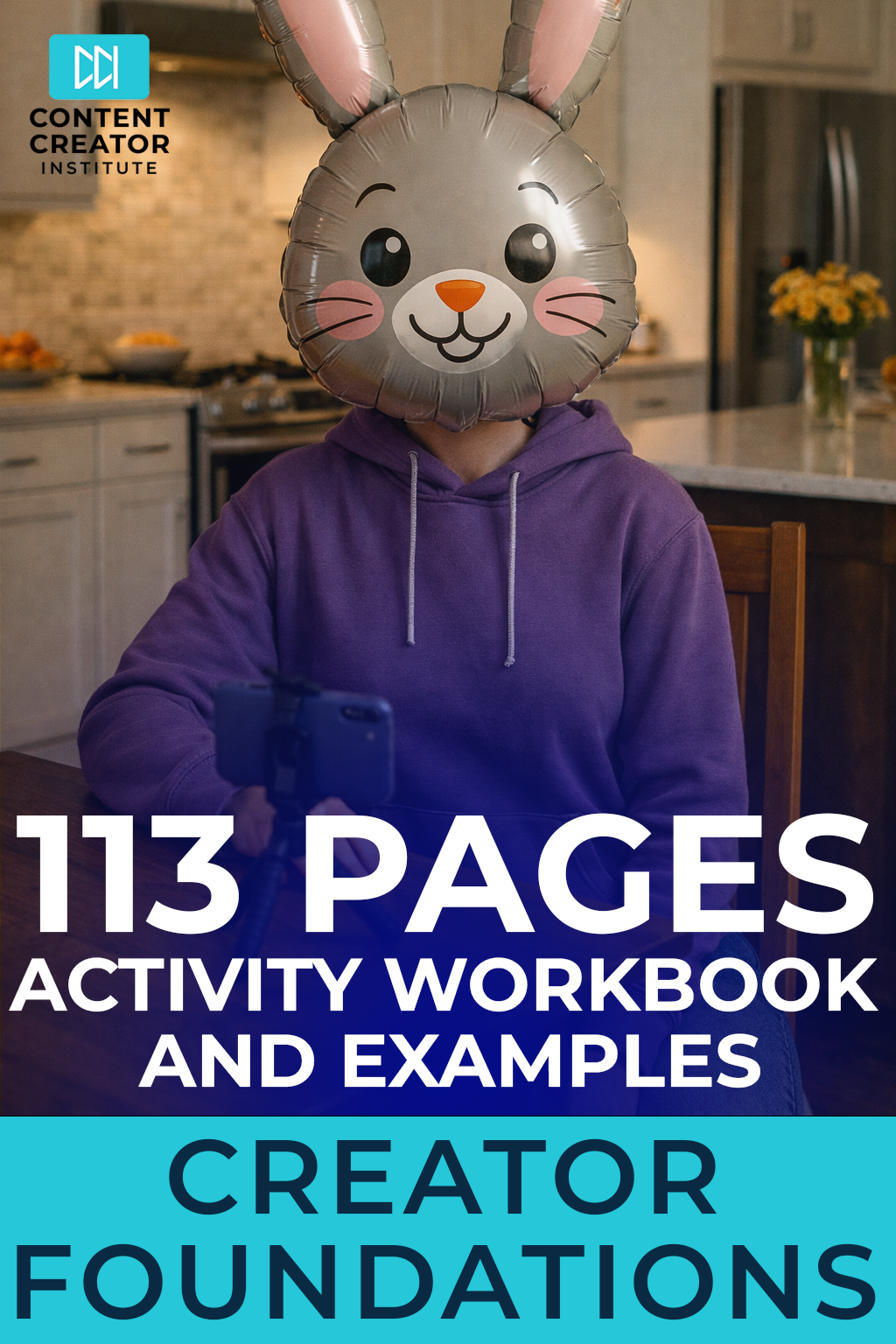
Level 1: Content Creator Foundations - Activity Workbook & Examples
$25.00
Your Practical Starting Point for Clarity, Confidence, and Consistent Creation
Are you thinking about becoming a content creator, but unsure where to start? Are you opening your phone or laptop with ideas in your head but no clear plan for turning them into consistent content? Do you want to build something meaningful without burning out, copying everyone else, or constantly second guessing yourself?
The Content Creator Foundations Activity Workbook works together with the Content Creator Foundations Course and is the behind-the-scenes planning system every new and aspiring creator needs. This 113 page guided workbook helps you organize your ideas, define your direction, and build sustainable habits so content creation feels clear and manageable from the very beginning.
Whether you are exploring content creation as a creative hobby or laying the groundwork for a long-term career, this workbook gives you a structured way to move forward with confidence instead of uncertainty.
Why This Workbook Matters
New creators don’t struggle because they lack ideas. They struggle because they lack direction, structure, and a clear starting point.
Between choosing a niche, figuring out what to post, learning how platforms work, setting up filming, editing, and trying to stay consistent, content creation can quickly feel confusing and mentally exhausting. Without a plan, most creators stop before they ever build momentum.
This workbook removes that friction.
Instead of guessing, you work through clear activities that guide your thinking, your decisions, and your actions. You are shown what progress actually looks like, with completed examples included throughout so you never feel stuck wondering if you are doing it “right.”
What Makes This Workbook Different
Most creator workbooks ask questions and leave you to figure out the answers on your own. This one shows you how to think through each step.
✔ 113 pages of structured activities tied to content creator decisions
✔ Clear instructions that tell you exactly what to do and why
✔ Fully completed examples for every lesson
✔ Focus on systems, not motivation or trends
✔ Designed to reduce mental load and build confidence through action
✔ Built for beginners without requiring experience or equipment
This is not about posting more content. It is about building a foundation that makes consistency possible.
Who This Workbook Is For
This workbook is designed for creators at the beginning of their journey, including:
🎥 Aspiring content creators exploring a new path
📱 Hobby creators who want more structure and clarity
🎙️ Creators building confidence on camera
✍️ Writers, educators, and professionals testing content ideas
🚀 New creators who want systems, not shortcuts
If you want to understand content creation before committing fully, this workbook gives you a safe, practical place to start.
What’s Inside the Workbook
Inside this 113 page activity workbook, you will work through exercises covering:
• Choosing and testing a content niche
• Defining a recognizable content style
• Building confidence on camera
• Understanding how platforms surface content
• Long-form versus short-form decision making
• Selecting a primary platform
• Creating repeatable content idea systems
• Balancing trend and evergreen content
• Building a personal content vault
• Setting up simple filming workflows
• Editing for speed and clarity
• Developing a realistic posting schedule
• Reducing overthinking and perfection paralysis
Each section is designed to move you from uncertainty to clarity, one step at a time.
How to Use This Workbook
Open a blank Word document or Google Doc and use it as your working space alongside the workbook. Answer the questions honestly, write freely, and focus on progress instead of polish. You are creating a planning and thinking tool, not a finished product.
You can move through one lesson at a time, revisit sections as your ideas evolve, and reuse the frameworks as your skills grow.
This workbook is meant to be returned to, not completed once and forgotten.
Imagine This…
Knowing what you want to create and why.
Opening your content notes and seeing clear ideas instead of scattered thoughts.
Feeling confident on camera because you understand your style.
Posting consistently because your process supports you.
Building something sustainable, whether content creation becomes a career or remains a meaningful creative outlet.
This workbook helps you build clarity first, so momentum can follow.
Get the Content Creator Foundations Activity Workbook
113 pages. Clear guidance. Real examples. No fluff. Build your foundation once so everything you create after this has something solid to stand on.
👉 Get the Workbook
Self-Reflection Questions
How much time can I realistically dedicate to content creation each week?
What posting schedule feels sustainable for my lifestyle?
Which parts of my workflow take the most time or energy?
What tasks can I batch to make the process easier?
What prevents me from being consistent right now?
What one improvement would make my schedule more sustainable?
How can I stay motivated even during low-energy weeks?
What habits help me maintain momentum over time?
How flexible do I want my schedule to be?
Keyword Phrases
Content schedule: A structured plan outlining when and how you will create and post content.
Time blocking: Allocating specific time periods for certain tasks.
Batch workflow: Completing multiple similar tasks in one session.
Content buffer: A reserve of pre-made content to maintain consistency.
Posting frequency: How often content is uploaded to a platform.
Workflow optimization: Improving the steps involved in content production.
Momentum building: Using consistent habits to increase productivity and engagement.
Capacity assessment: Evaluating how much content you can realistically produce.
Tools and Resources
Google Calendar for time blocking
Notion or Trello for content planning
YouTube, TikTok, or Instagram scheduling tools
CapCut or DaVinci Resolve for streamlined editing
Voice notes apps for quick content idea capture
Content calendar templates
Productivity timers or Pomodoro apps
Cloud storage for organizing footage and drafts