
RØDE Wireless GO Gen 3 Color Microphone Review
A Professional Evaluation for Interview Creators and Field Production
Wireless audio is no longer a luxury for creators. It is foundational infrastructure. Whether you are filming sit-down interviews, mobile street content, documentary-style pieces, or brand features, your microphone system determines whether your work feels professional or disposable. Over the last decade, I have tested nearly every major wireless lavalier system across commercial shoots, creator setups, and live environments. Some prioritize broadcast-grade sound. Others emphasize portability. Very few manage to combine audio reliability, visual identity, and creator-first usability in one cohesive system.
The RØDE Wireless GO Gen 3 microphone attempts to do exactly that. It builds on one of the most recognizable wireless microphone platforms ever released while introducing meaningful upgrades for modern multi-platform creators. This microphone system is perfect for interview environments, outdoor shoots, mobile production, and studio-adjacent use. If you buy this portable microphone system, you’ll see why RØDE continues to dominate in the creator wireless category.
This review focuses on four areas that matter most to real-world users: audio performance, workflow efficiency, visual branding impact, and long-term creator value.
1. Audio Performance and Signal Reliability in Real-World Environments
The primary responsibility of any wireless microphone system is simple: deliver stable, intelligible audio under imperfect conditions. The RØDE Wireless GO Gen 3 microphone performs exceptionally well here, especially for creators who operate in uncontrolled environments such as sidewalks, events, conventions, and public interviews.
You may find in testing, that the Gen 3 microphone maintains consistent signal integrity at practical interview distances without noticeable dropouts. This stability is critical in documentary and street-level work where re-takes are rarely possible. The internal mic capsules offer a clean tonal balance that favors clarity without introducing harshness in the upper frequencies. Voices remain present without sounding brittle, and lower mids are preserved without muddy buildup.
One particularly strong attribute is how the system behaves during unpredictable dynamic range shifts. Interview content often moves rapidly between quiet speaking and elevated vocal projection. The Gen 3 microphone manages these transitions smoothly, preventing the aggressive clipping that plagues many compact wireless systems. This makes post-production significantly more efficient. Instead of devoting time to signal repair, editors can focus on pacing, narrative flow, and visual polish.
Latency remains negligible, ensuring accurate sync in both camera-mounted and mobile recording configurations. This reliability makes the system compatible with a wide range of production pipelines, from simple YouTube workflows to multi-camera podcast capture environments.
From a professional audio perspective, the Wireless GO Gen 3 microphone does not attempt to compete with full-scale broadcast lavalier systems in studio-controlled environments. Instead, it succeeds at what its user base actually requires: dependable, clean, repeatable audio in fast-moving production scenarios.
2. Workflow Efficiency and On-Set Practicality
Professional equipment is defined not only by output quality but by how efficiently it integrates into real production workflows. The Wireless GO Gen 3 microphone excels in reducing friction across every stage of content creation.
The clip-on transmitter design remains one of the most effective time-saving implementations in wireless audio. Attachment is fast and secure without requiring wardrobe modification, cable routing, or secondary mounting hardware. In interview situations, this translates to faster guest preparation and fewer interruptions to the conversational rhythm.
The system also adapts smoothly between solo operation and two-subject interviews. This flexibility is particularly valuable for creators who alternate between on-camera commentary, guest features, and collaborative content without changing audio ecosystems.
Battery performance remained consistent across extended field sessions. In professional field use, predictable battery reliability matters more than headline battery life numbers. There is little margin for error when shooting long-form interviews or event coverage. The Gen 3 microphone held charge confidently throughout full production days without forcing mid-session replacements.
Another meaningful workflow benefit lies in how little post-production correction is required. The cleaner and more stable the input, the faster the turnaround. In a professional environment where time equals cost, this reliability compounds into measurable productivity gains.
This is equipment that clearly understands creators who shoot alone or with minimal crew. It does not demand technical staging. It simply integrates into movement-driven workflows without introducing complexity.

3. Visual Identity, Color Systems, and On-Screen Presence
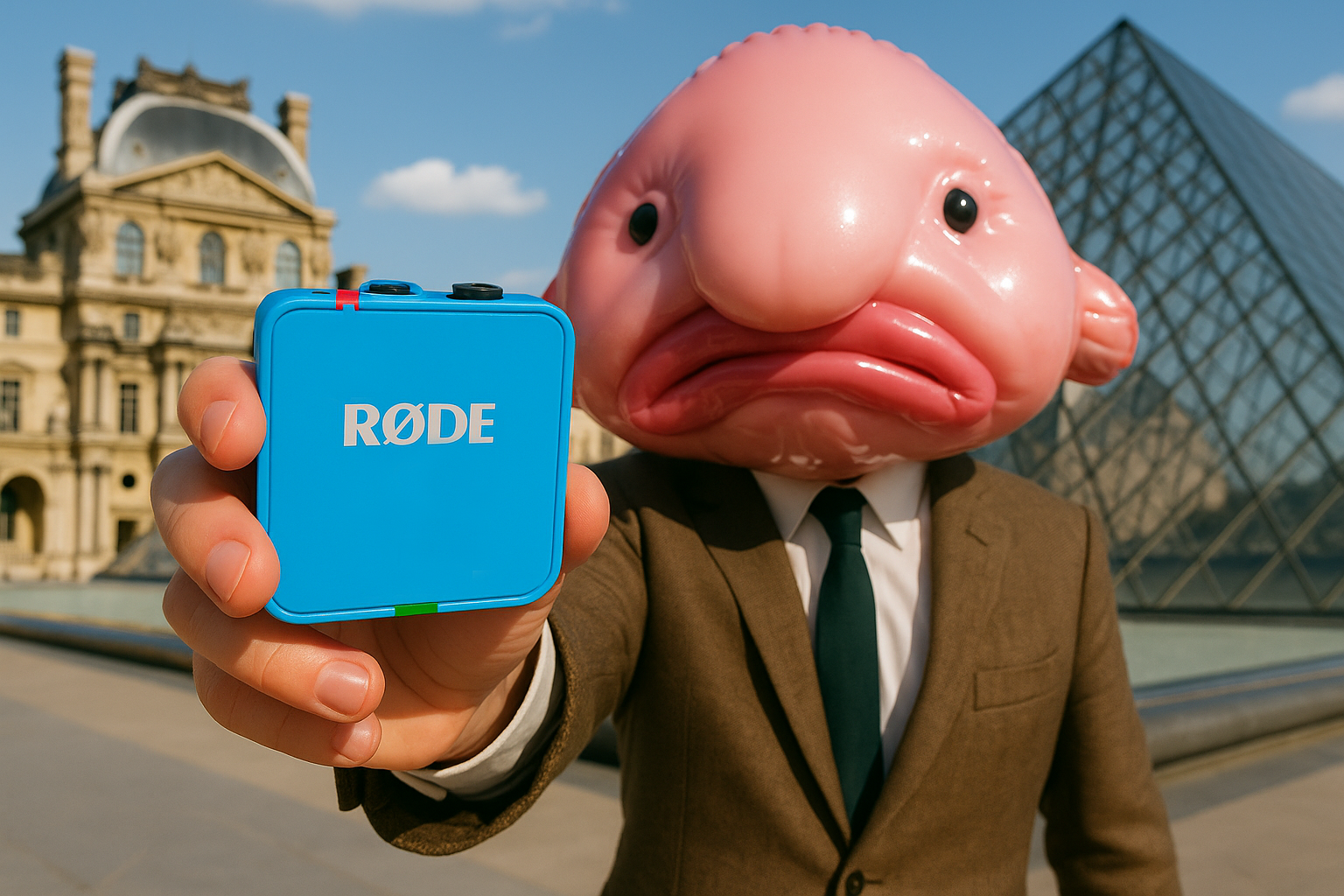
It is unusual for a microphone review to include visual aesthetics as a serious evaluation category. With the Wireless GO Gen 3 microphone, it is unavoidable. RØDE’s expanded color options fundamentally shift how wireless audio appears on camera. Colors include: Black, White, Red, Orange, Green, Purple, Pink, Blue, Cobalt, Clay, Lilac, Stone, Rose, and Moss.
In traditional broadcast environments, invisibility is the goal. Lavaliere microphones are hidden beneath wardrobe, color-matched to skin tones, or disguised as accessories. Creator-led content operates under a different visual language. Visibility is no longer a liability. It is frequently an asset.
The Gen 3 microphone system embraces this shift. The colorways introduce a deliberate on-screen presence that integrates with modern creator branding rather than fighting against it. On camera, the transmitters do not disappear. They anchor the speaker visually, creating immediate clarity about who is mic’d and where the audio source originates.
From a production design perspective, this visual clarity offers subtle but impactful benefits. The microphone becomes part of the framing language. It guides viewer attention during quick cuts. It adds contrast in busy environments. It reduces visual ambiguity in multi-speaker scenes.
For creators building recognizable visual branding, this becomes even more powerful. A consistent mic color can function as a recurring visual motif across thumbnails, reels, and episodic formats. In short-form environments where visual recall drives retention, this is not trivial.
Importantly, the colors are not merely aesthetic skins. The hardware finish remains durable and professional. It does not sacrifice build quality for visual identity. The equipment still communicates technical credibility while supporting brand expression.
For interview creators in particular, this duality matters. Guests visually recognize the microphone immediately. This increases trust and improves performance comfort. The setup feels legitimate, not improvised.
In modern content ecosystems, equipment visibility is part of storytelling. The Wireless GO Gen 3 microphone is one of the first wireless systems to acknowledge and intentionally support that reality.
4. Long-Term Value for Creators, Brands, and Production Teams
Professional buyers evaluate equipment not by initial excitement but by how well it holds value across extended production cycles. The Wireless GO Gen 3 microphone demonstrates strong long-term positioning across several creator segments.
For early-stage creators, it offers immediate audio competence without overwhelming technical complexity. As content scales, the same system remains viable for sponsorship-driven brand integrations, podcast production, documentary-style projects, and high-volume short-form publishing.
For brand teams and agencies working with creators, the system offers consistency across distributed production networks. When multiple creators use the same reliable wireless platform, content maintains a consistent baseline of audio quality that simplifies post-production standardization.
For educational and training environments, the Gen 3 microphone provides durable simplicity. Students and trainees can deploy professional wireless audio without inheriting the fragility or cost overhead of traditional lavalier systems.
From a depreciation standpoint, RØDE equipment historically retains operational relevance longer than many competitors due to firmware support, ecosystem adoption, and broad accessory compatibility. This reduces the effective cost of ownership across multiple project cycles.
The Wireless GO platform also benefits from wide industry adoption. This means troubleshooting resources, third-party mounting solutions, and workflow templates already exist across the creator ecosystem. In professional deployment, widespread ecosystem familiarity reduces downtime.
Final Evaluation: Who Should Use the RØDE Wireless GO Gen 3 Microphone?
The RØDE Wireless GO Gen 3 microphone is not attempting to replace studio-grade lavalier rigs in controlled broadcast production. Instead, it accomplishes something more strategically valuable: it establishes a professional baseline for the creator economy that balances sound quality, mobility, workflow speed, and visual brand integration.
This system is ideally suited for:
Interview-driven content creators
Mobile documentary productions
Public-space video teams
Podcast creators recording on location
Education and training programs
Brand-led social video production
Its greatest strength is not any single feature in isolation. It is the way those features intersect. Clean audio without fragile wiring. Workflow speed without sacrificing control. Visual identity without undermining credibility. Reliability without burden.
In professional evaluation terms, the Wireless GO Gen 3 microphone does exactly what high-value creator equipment should do. It removes friction. It protects performance. It enhances presentation. And it scales with the career of the person using it.
For creators serious about interviews, conversational content, or location-based video work, this system currently sets one of the strongest benchmarks in the wireless compact microphone category.
